
Almost exactly two years ago, we took our first cruise, a Viking tour of the Rhine River. We enjoyed it so much that we almost immediately started looking for another one, and settled on a cruise on another of Europe’s great rivers, the Danube. That trip wrapped up last week, and I have some thoughts—and a lot of photos—to share.
By way of introduction, the “we” of that Rhine cruise included my wife, Jean, and my brother, Phil, and his wife, Diane. The cast for the Danube cruise included Jean’s brother Tom and his wife, Joan, and Jean’s two sisters, Nancy and Carol. The original plan was for Phil and Diane to go with us for an in-law mashup, but they had to cancel at the last minute.
Our Danube trip began in Budapest and went upriver as far as Regensburg, Germany; from there, we opted for an extension that took us to Nuremberg and Prague for two days each. All in all, it was 10 days of touring and two long days of air travel. With at least one guided tour almost every day, that’s a lot of history and information to absorb, and I won’t try to regurgitate it all here; instead, I’ll try to let the photos do most of the heavy lifting. You’re welcome.
Budapest
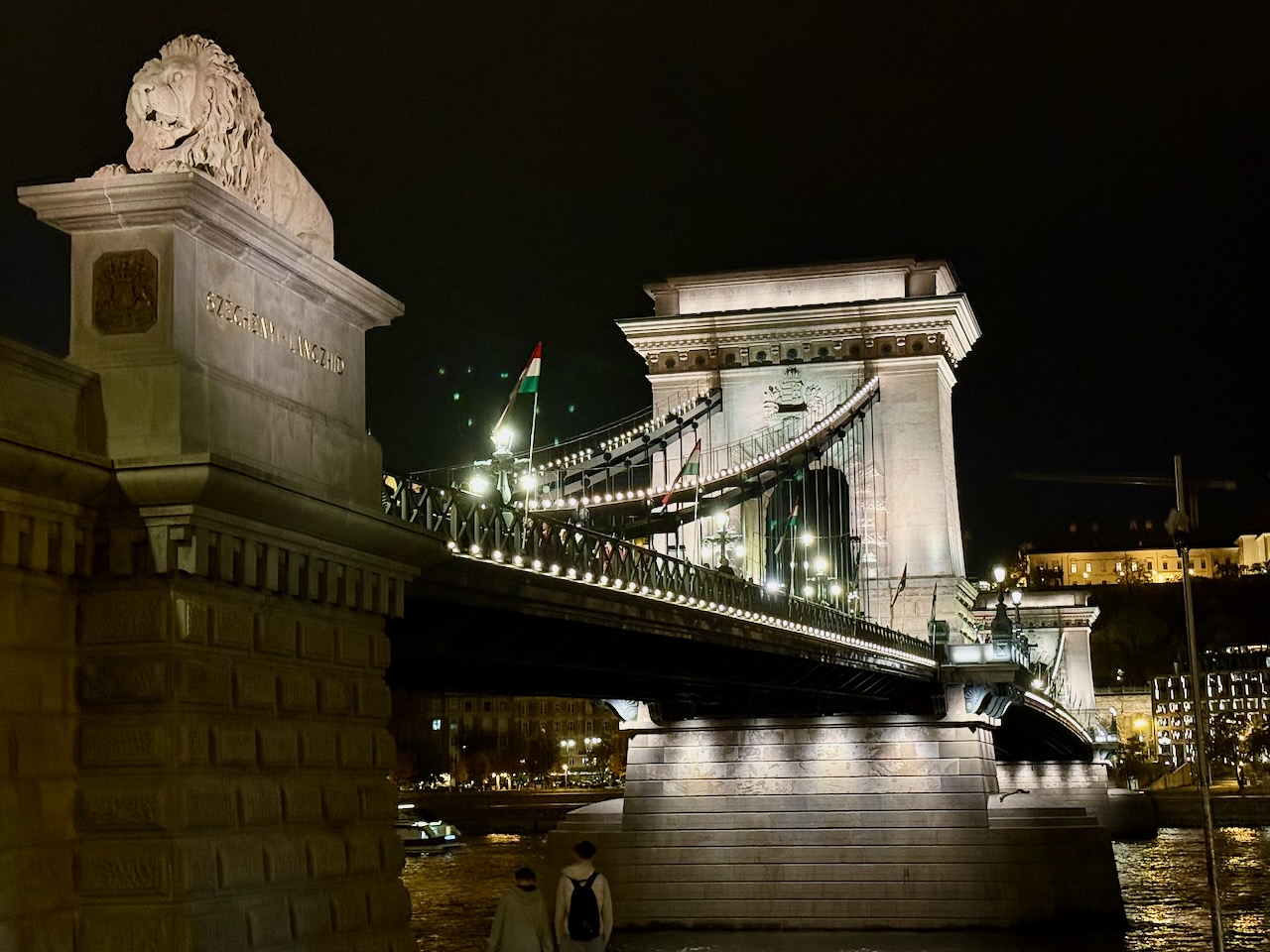
If there’s one flaw in Viking’s itinerary, it’s that we didn’t get to spend enough time in the Hungarian capital. Budapest is a beautiful, and from what we could see, fascinating city. We arrived late in the afternoon and, after dinner on the ship (the Viking Tor, identical in every respect to the ship on which we cruised the Rhine and most of the other river “longships” in Viking’s fleet), boarded a smaller, non-Viking, vessel for a cruise to see the city by night. The architecture in Budapest is beautiful, day or night, and the add-on was well worth it.
The next morning we had a bus-and-walking tour, first of the “Pest” side of the city and then the “Buda” side. The former is the more modern and flatter part and our tour took us to Heroes’ Square and then the nearby City Park. The Buda portion of the tour was entirely within the Castle District, which included the beautiful Mathias Church and an overlook with a spectacular view of the city.
After an hour or so of free time there, we boarded the bus again for a long ride to Esztergom, Hungary, where we toured another enormous cathedral overlooking the river. On our first night aboard the Tor, our cruise director, the excellent and very Irish Paul, had joked about “the ABCs of European river cruises.” ABC stands for “Another Beautiful Church” … but by the end of the tour, you’re calling it “Another Bloody Church.” Can’t argue with either sentiment; every city we visited featured at least one enormous and ostentatious, but ultimately beautiful, church, cathedral or abbey.
Our ship had left Budapest right after we disembarked that morning and cruised upriver to Esztergom, so by the time we boarded it for a late lunch, we had completed the Hungarian part of our trip. I would definitely like to get back to Budapest and explore more of it.
Here are some of the highlights:


Vienna
It’s a 24-hour cruise from Budapest to Vienna, Austria, which was the reason for the ship’s early departure. Between the two cities, the Danube flows for a few miles—I mean kilometers—through Slovakia, so technically I can add another country to my list of nations visited. But only technically.
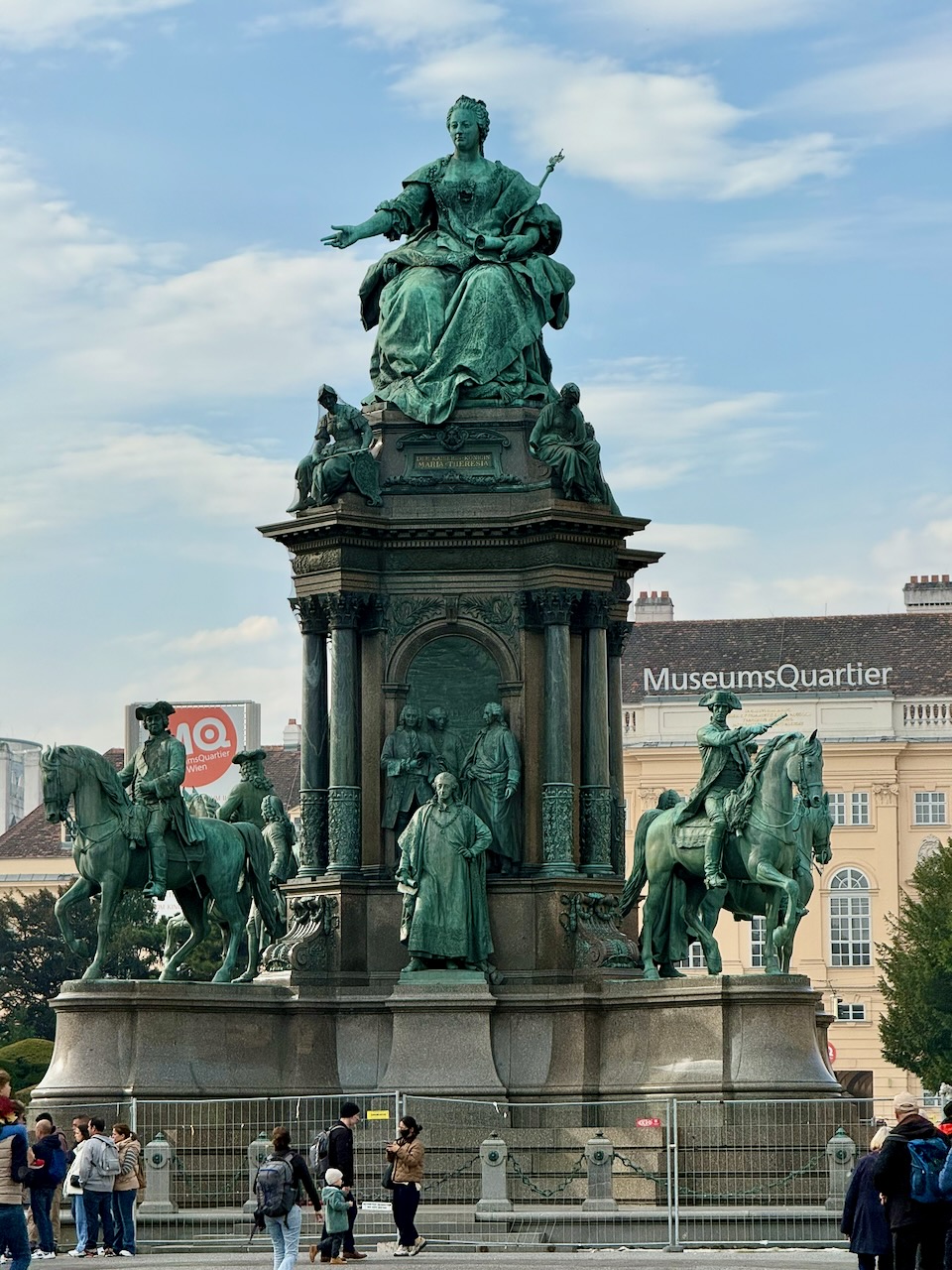
We pulled in to the Austrian capital while eating breakfast on our second day and then set out for a walking tour that began at the Maria Theresa monument and then to the Hofburg Imperial Palace. We saw the balcony from which Hitler addressed thousands of Austrians after he had annexed his native country into Germany; during the speech he didn’t say the word “Austria” once. It was not the last time on this trip that our paths would crossed with that of Hitler’s from the 1930s.
We walked through the city center and saw the Holy Trinity Column, completed in 1694 to commemorate victims of the plague, and the massive St. Stephen’s Cathedral, and found a coffee house for a short break and about a week’s worth of calories.
Our itinerary gave us a rare second day in Vienna, but I didn’t go back into town; instead I took a couple of long walks along and across the Danube. A few pictures from our two days:


Krems and the Wachau Valley
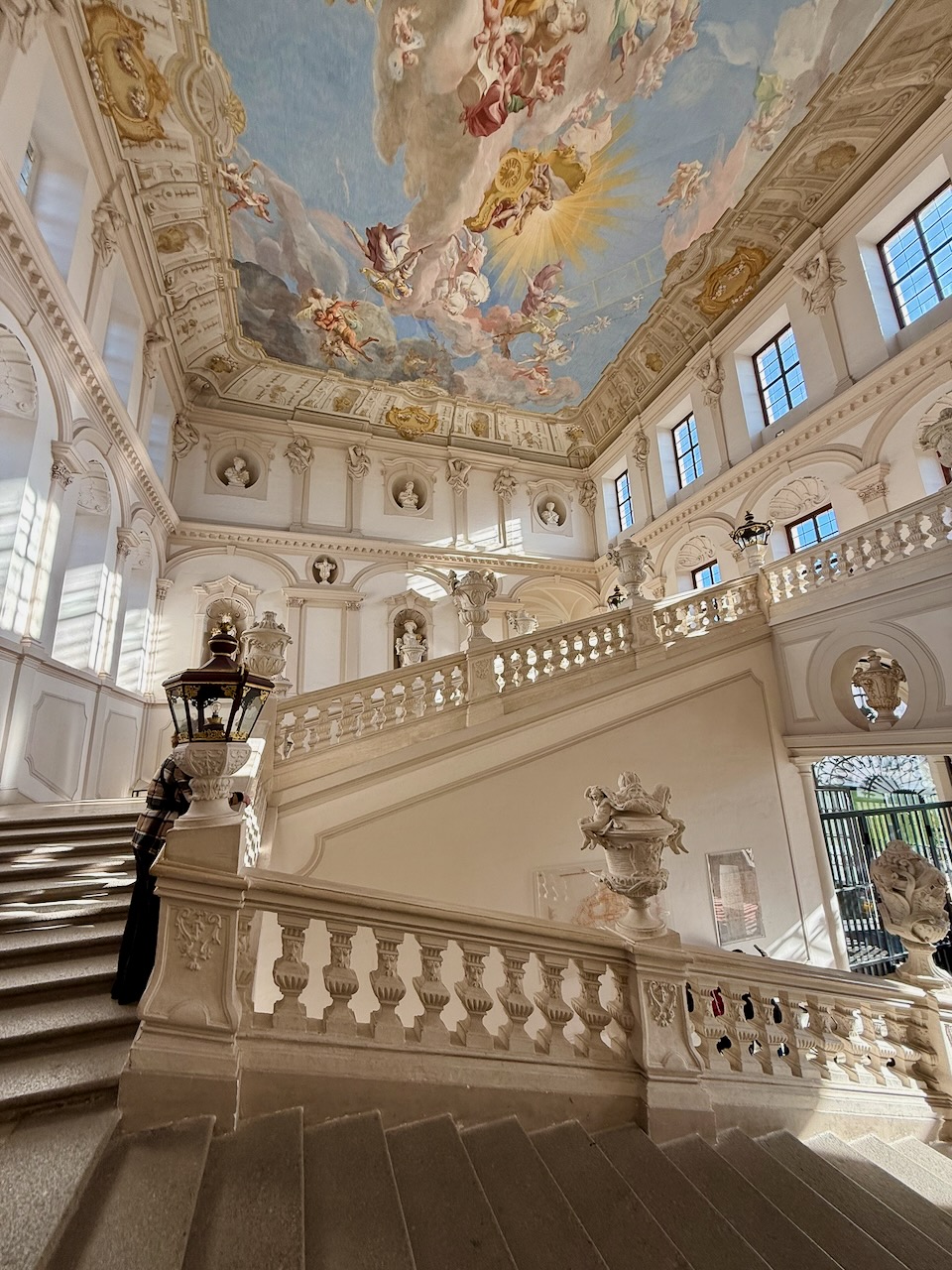
Day four took us to Krems, Austria, a small town near the historic Gottweig Abbey, a Benedictine monastery founded in 1083. Most of the buildings have been substantially rebuilt since then after at least two catastrophic fires, and today the Abbey does quite well, owning thousands of acres of surrounding land, and making wine, beer and apricot marmalades; we got to sample some of the wine and it was quite good.
That afternoon the Tor sailed up through the Wachau Valley, a UNESCO World Heritage Site featuring a number of castles and other architectural points of interest. We were fortunate to have a beautiful day, so we spent the entire afternoon on the top deck watching the scenery roll by. We were fortunate to have beautiful weather the whole week we were on the ship.
Some pictures of the abbey and then the sights in the Wachau Valley:


Passau
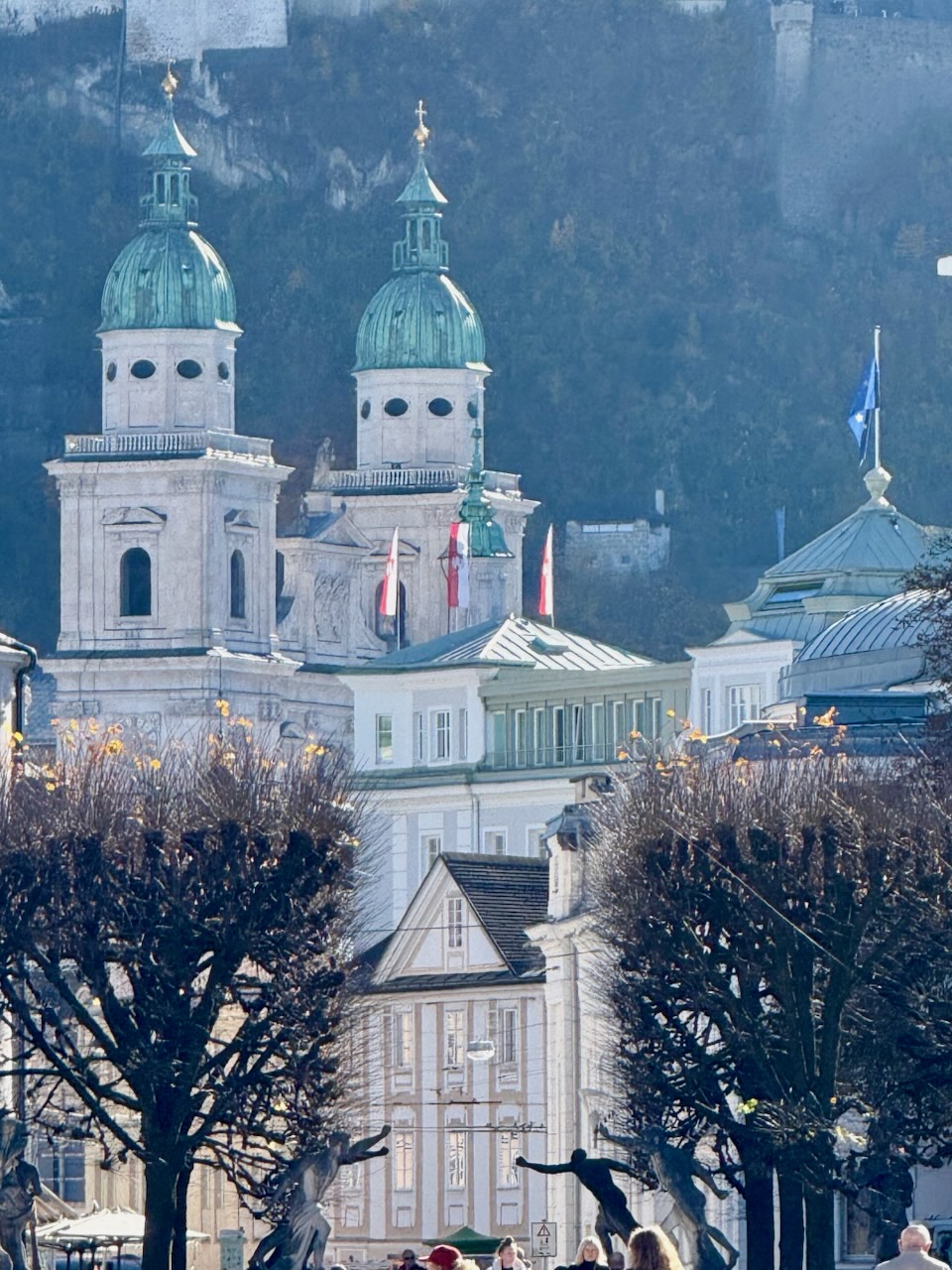
On the next day, the Tor was in Passau, Germany, and we split up. Everyone else in our party had elected an optional all-day excursion to Salzburg that included, among other things, visits to sites where The Sound of Music was filmed. They all came back and said they loved the tour, but for my part, I elected to stay in Passau for the included walking tour in the morning, and some exploring on my own in the afternoon. Passau is a cute little town at the confluence of three rivers: the Inn River out of Switzerland; the Ilz, which is entirely within Germany; and the Danube.
One highlight in Passau is the enormous Baroque St. Stephen’s Cathedral, which features the largest pipe organ in Europe. Part of the 17,774-pipe organ is being cleaned and renovated now, but we were still able to hear part of an organ concert during our tour, and yes, the sound definitely filled the space.
After a quick lunch, I hoofed it across the river to the Veste Oberhaus fortress. Built beginning in 1219 on a steep hill overlooking the town, the fortress seems like it would have been both strategically perfect and physically insurmountable, with walls around massive walls. Today, the site is a museum, a youth hostel and a restaurant.
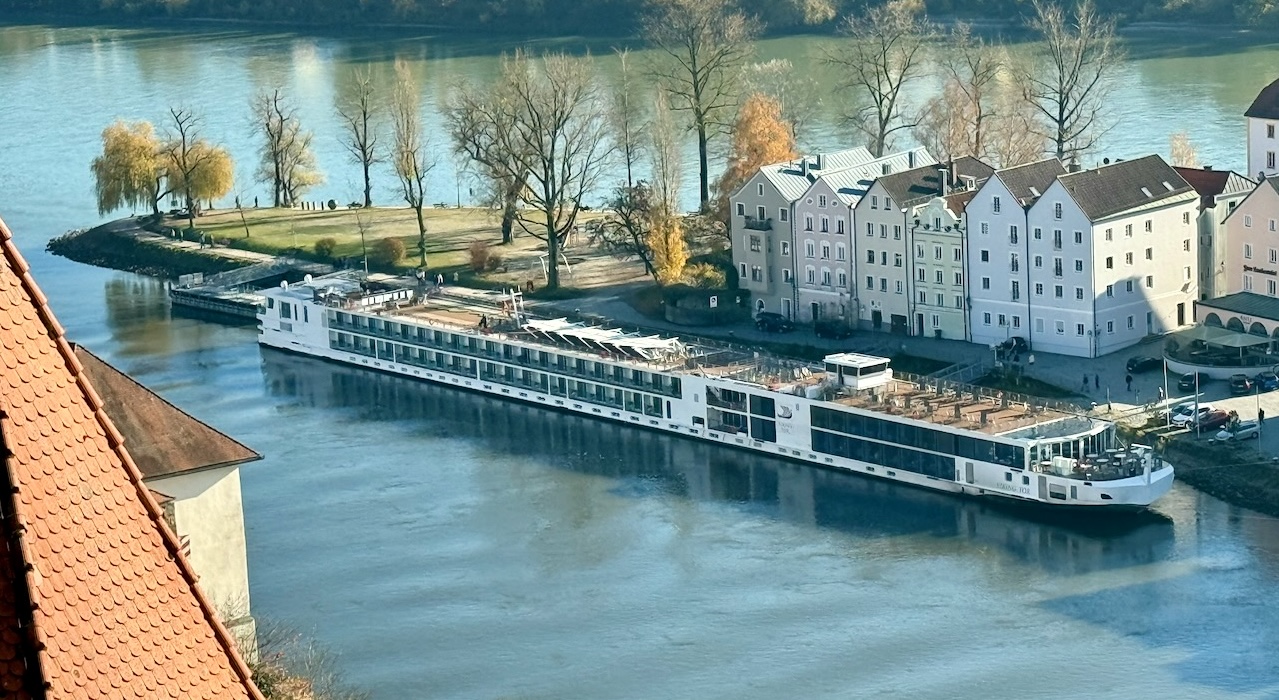
For my part, I just wanted a view of the city. There’s an observation tower, which I climbed, but from the top I was having trouble orienting myself; it turned out that the lower parts of the fortress blocked most of the Danube and the city’s waterfront; I could see a river, but in fact I was looking at the Inn River on the other side of the town. The best view turned out to be from a lower vantage point, the “Three Rivers View,” which I could only reach by going through the museum. It’s a very twisty museum, built within this 12th century castle, and I’m sure it was interesting, but I was in something of a time crunch because of the ship’s scheduled 2 p.m. departure, so I had to rush through it. I did, eventually, make it to the Three Rivers View, and it was worth it. I could see not only the whole city laid out in front of me, but also our ship, in the photo at the top of this post. I absorbed the view for a while, took my fill of pictures, and then made my way back down the hill, across the river and back to the ship with just a few minutes to spare.
Some more photos of Passau:


Regensburg
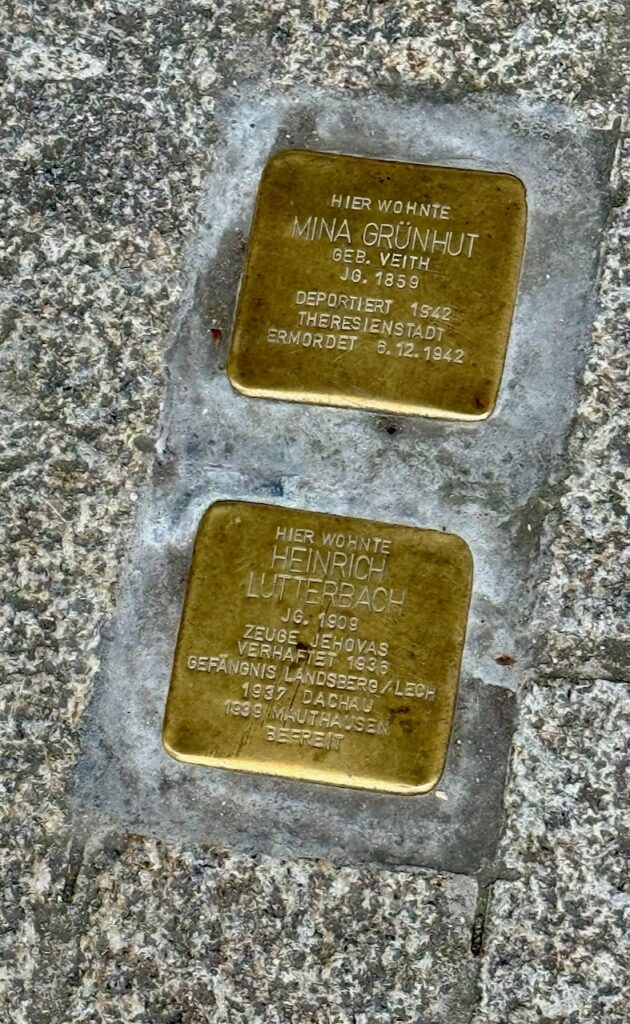
The Tor’s last stop was Regensburg, another historic German city. The walking tour there was one of the most interesting tours on our trip, focusing on much of the Jewish history of the city. We saw numerous “stumbling stones” (Stolpersteins), small brass plaques that commemorate victims of the Holocaust. Each plaque is placed in the street or sidewalk at the last residence of the victim, and contains their name, dates of birth and death or removal to a concentration camp. The Stolperstein project was conceived and begun in 1992 by German artist Gunter Demnig and to date has laid more than 100,000 stumbling stones across Europe. We saw them in several cities on this trip, as well as our Rhine tour two years ago. It’s a fascinating project, and our excellent Regensburg tour guide, Rosa, told us the history of every stumbling stone we came across, and even showed us a picture of herself with Demnig.
Regensburg is a large city—the fourth largest in Bavaria—but one thing to remember about an organized trip like this is that visitors are generally only shown the “Old Town” portion of a given city. That’s not a bad thing, as there’s plenty of important and interesting history to be discovered. And anyway, as tourists, we enjoyed our visit.
Pictures from Regensburg:


Nuremberg
The next morning, we bid farewell to the Tor and its excellent crew — special shout out to Vlad and Angell in the dining room — and boarded a bus for Nuremberg for the first part of our extension. It was described to us that the first day we’d cover the Medieval and the second day it would be the Evil. And that’s about right.
Nuremberg’s Old Town is as beautiful and interesting as any of the cities we visited, and we had a good time exploring and shopping. We even saw a group of extras from a movie being filmed at the huge St. Siebald church, dozens of them in all manner of medieval costumes. We watched as they walked from the church back to what I assumed was their staging/catering area. We surreptitiously snapped a few photos despite commands from a set manager not to take pictures. When I walked past the church the next day, there they were again, and I saw a sign indicating that the name of the production might be “The Rage,” so I’ll be watching for that in a year or so.
As for the “Evil” part of our visit, our tour the second morning took us through the sites of the huge annual rallies Hitler held in Nuremberg in the 1930s. The rallies drew as many as a million people, in a city of 500,000. Nuremberg was a transportation center of Germany at that time, which made it attractive for the Nazis trying to draw big crowds to enhance their propaganda efforts.
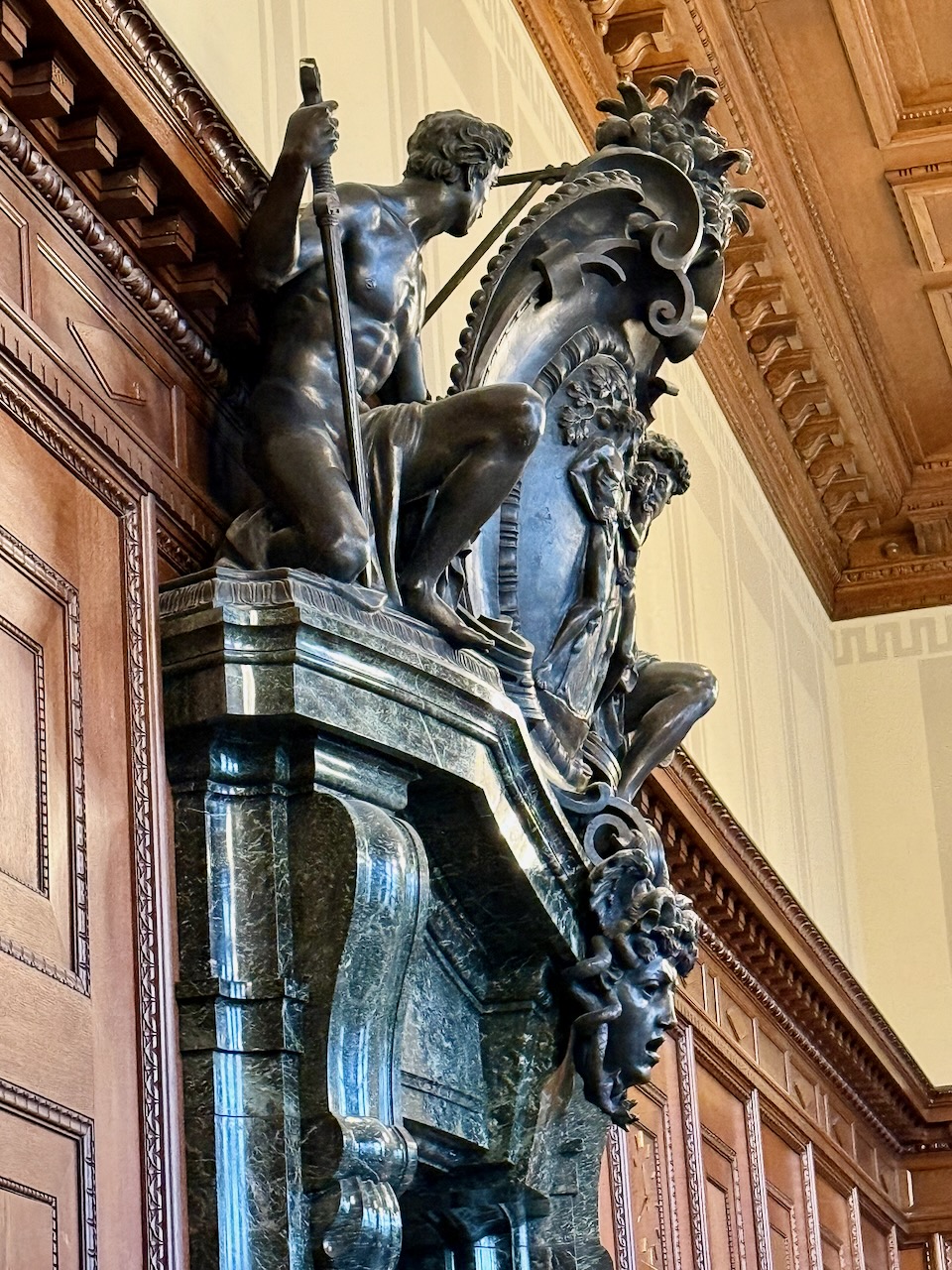
Our tour concluded with a visit to the courtroom where the war crimes trials were held after the war. A presentation included a film on the precedent set by the international tribunals holding war criminals to justice, and that has led to similar tribunals since the 1940s such as Rwanda and the former Yugoslavia.
Photo highlights from Nuremberg:


Prague
Our final stop on this trip was Prague, Czech Republic. For Jean and me, it was a return visit; before 2023, our only trip to Europe was a chaperoning gig in Prague with our son’s high school band in 2006.
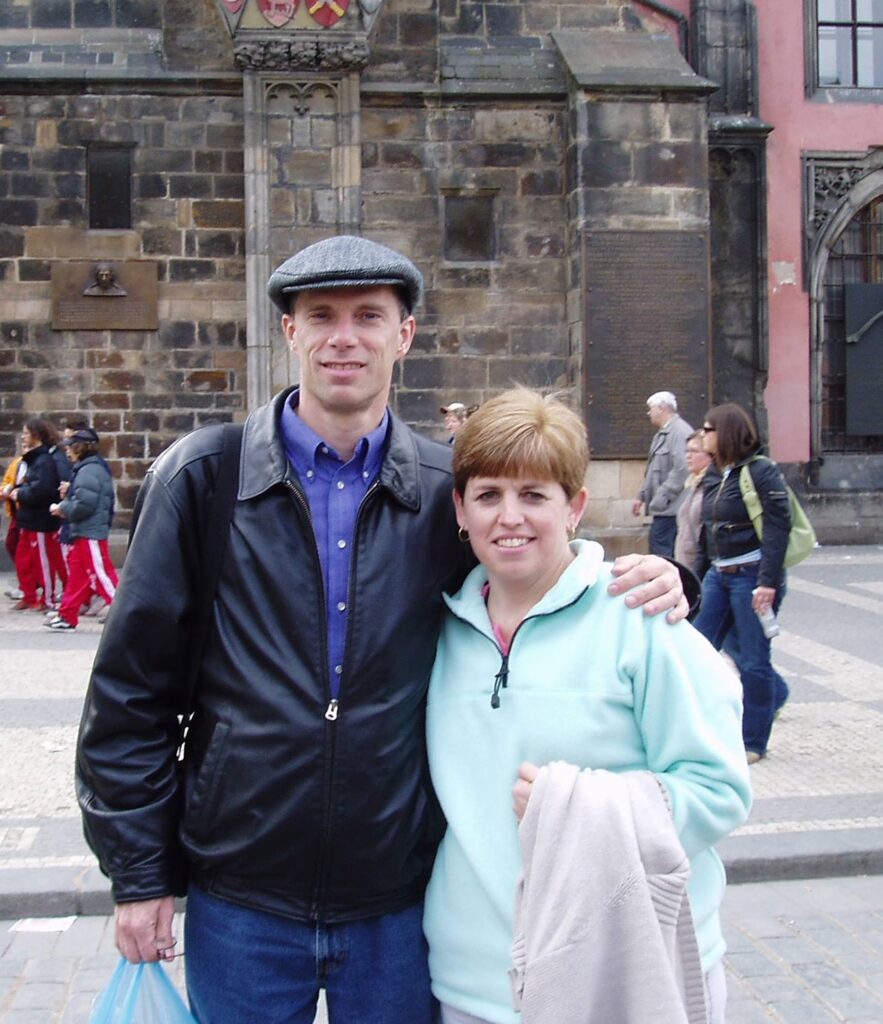
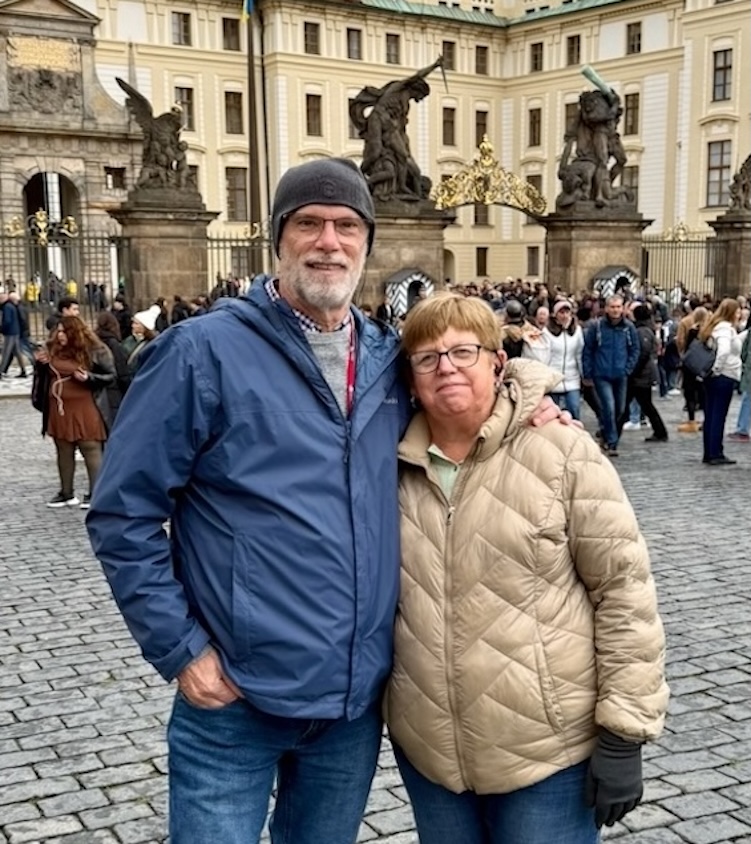
It was great to be back. The city was much the same, and seemingly just as crowded, even though our previous visit was during the busy Easter season. Our hotel was near a tram line, and it’s not an exaggeration to say that, during the day and well into the night, there were one or two loaded trams going by every minute.
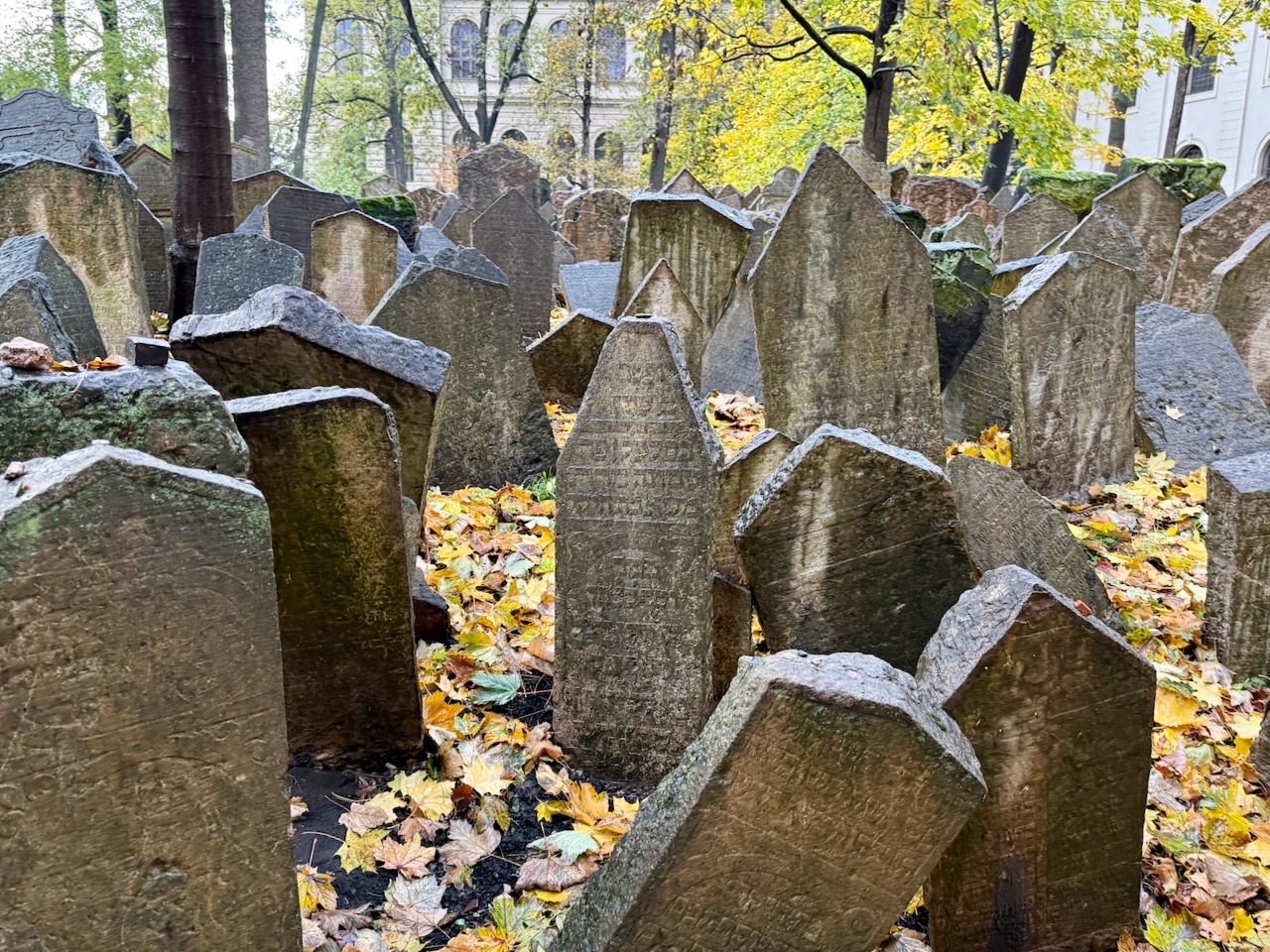
Our first guided tour this time took us through the Jewish Quarter, where we toured three synagogues: the orthodox Old New Synagogue, which is the oldest active synagogue in Europe, built in 1270; the Spanish Synagogue, built in 1868 and so named for its moorish design; and the Pinkas Synagogue, the walls of which are inscribed with the names of the 77,000 Czechoslovakian Jews who were killed during the Holocaust. It’s an unfortunate sign of the times that we had to pass through metal detectors to enter each of the synagogues. We also visited the Old Jewish cemetery, which contains an estimated 100,000 bodies, buried in as many as 12 layers.
That evening, Jean and I took a “Prague by night” tour, which took us to the Strahov Monastery overlooking the city and then through Prague’s Lesser Town.
On our second day, we took a five-hour “panoramic Prague” tour; we were lucky to have Pavel, the same guide from our Jewish Quarter tour the day before. The tour took us through all of the main sites, many of which we remembered from 20 years ago: Old Town Square, the Astronomical Clock, the Charles Bridge, Prague Castle and St. Vitus Cathedral and much more. It was a lot of walking, but a great overview, and it was definitely fun to be back in Prague. Here’s the last batch of photos:


Wrapping Up
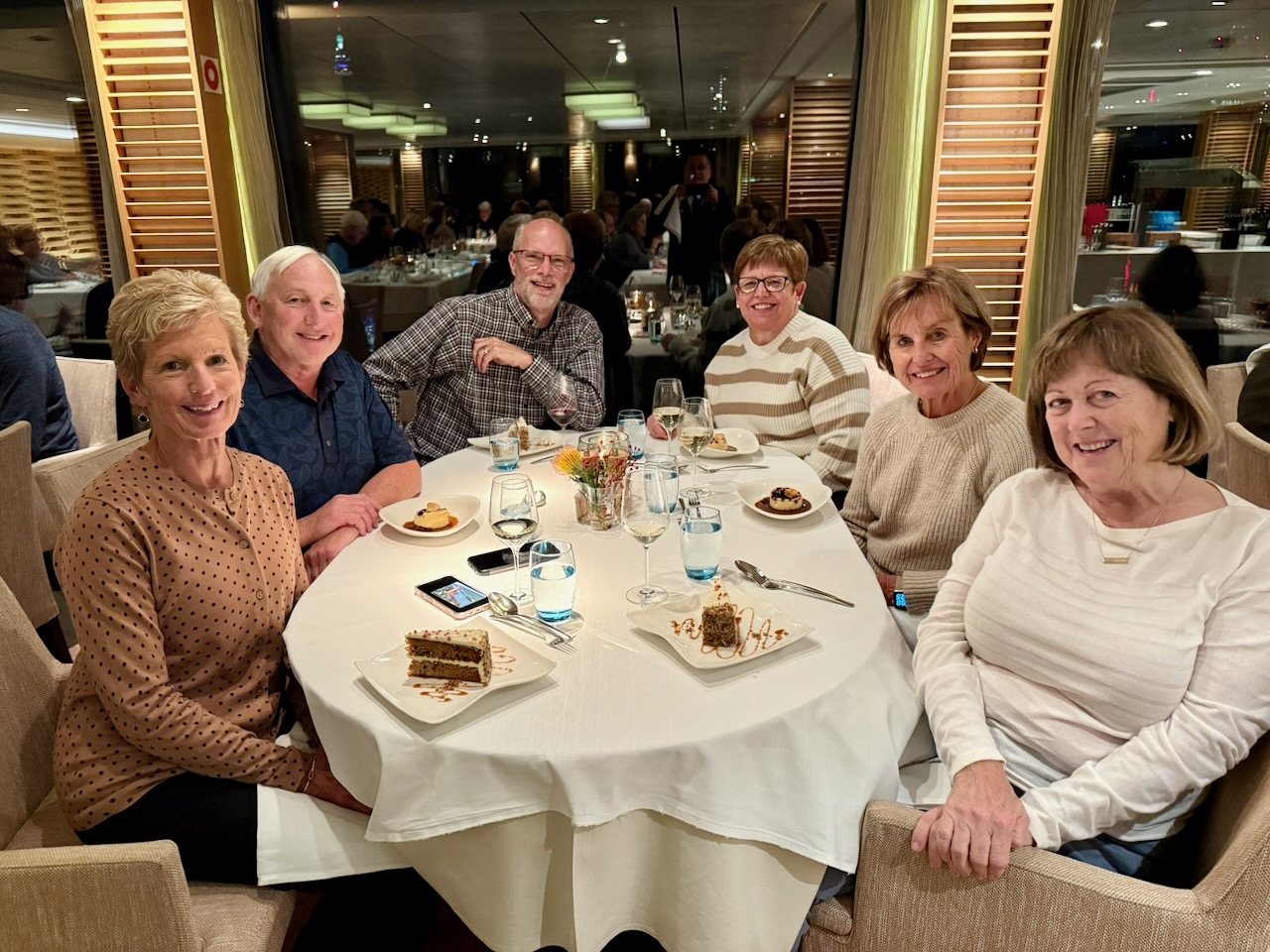
I averaged 5.5 miles of walking per day on the trip, including the two days that were mostly spent on airplanes to get there and back. I still managed to gain almost five pounds, thanks to the fabulous food that we were served, both on board the ship and and in the local restaurants we picked out in the various towns. I think I ate everything on every plate and I don’t regret a single bite.
And a word about Viking: as I mentioned, this was our second Viking cruise, and the level of service and the quality of the experience was excellent on both of them. This was our second trip, but definitely not our last.
